Technical Architecture · Today vs. Our Demand
Honest About Today.
Maximalist About Tomorrow.
Left is what Flock documents today, with sources. Right is ProFlock's separate proposal for wider coverage with audits — not a Flock forecast.
What Flock documents — no hype
- —Captures point-in-time rear vehicle images, plates, state tags and visible vehicle features (make, color, racks, decals).
- —Flock cut its default from 30 days to 7 days in Aug 2026 for new law-enforcement customers, with auto-purge unless locked to a case. Agencies can set longer windows. Our proposal: a year of case-locked history with audits.
- —Searches are tied to user and case reason with audit tools. Fort Worth's Sept 2025 policy requires reasonable suspicion, case code and documentation. Our proposal: keep after-the-fact audits, no pre-approval queue that stalls the first 48 hours.
- —Operates in 49 states on agency-controlled sharing. Agencies decide sharing lists. Our proposal: sharing on by default with opt-out, so county lines are not blind spots.
What the product does NOT do — and what we demand anyway
- —No facial recognition in the product: Flock states its LPR does not scan faces or occupants. Separately, we support adding face matching strictly for violent-felony manhunts and AMBER alerts — under a case number, a warrant where required, and the same audit trail.
- —No continuous GPS-style tracking: LPR records discrete passes at locations and times, not live video of people. That is why single-camera gaps matter: a pass missed is a lead missed.
- —No bulk sale or Palantir feed stated: Flock states it does not sell customer data, has no Palantir integration, and holds no ICE contract. Customers own data and control sharing. Separately, we support selling the same customer-controlled product to ICE for criminal cases, under the same logs and audits — no backdoors.
- —No automated tickets: Flock describes investigative leads for detectives, not automated traffic enforcement or predictive profiling.
How sensors work together when seconds count — if you deployed them
911 Call Reported
Example: carjacking victim calls 911. In RTCCs, transcription can route vehicle details while the call is active.
Vehicle Description Logged
Example: partial description ('white SUV, roof rack') is logged for corridor search where cameras exist.
Corridor Hit, If Covered
If the vehicle passes a covered arterial, an alert can notify patrol. No coverage means no alert.
Drone Launch, If Available
Where DFR is deployed, a docked drone can launch. Lompoc averaged 98.1 sec Aug-Oct 2026; Flock cites ~86 sec for Alpha deployments.
Stop With Audit Trail
Officers act on the lead. Queries, case numbers and flight logs are recorded for after-the-fact review under agency policy.
The 4-layer stack they hate us for loving
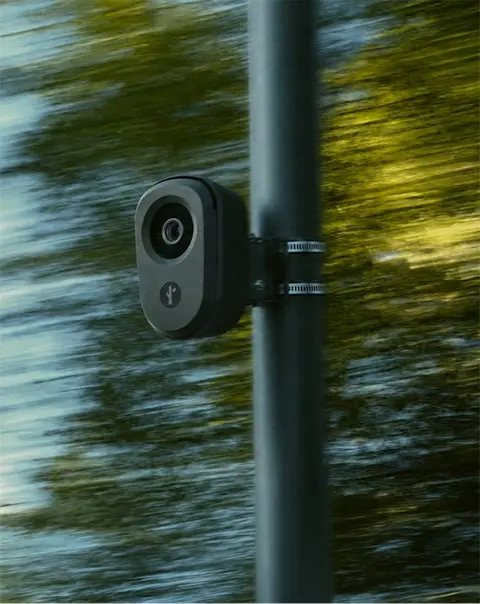
Captures plate, state, make, body style, color and visible vehicle features (racks, decals, damage) via FreeForm search. No facial recognition in the product today.
No uncovered half-mile gaps on high-crime arterials and subdivision gateways, so stolen cars and hit-and-run drivers are recorded entering and leaving.

Launches on 911, gunshot or LPR alert. Flock says ~86 sec average in DFR deployments; Lompoc observed 98.1 sec Aug-Oct 2026. Reads plates from 2,000 ft, 45-min flight with battery swap.
Rooftop docks within 3 miles of urban 911 sectors, so aerial eyes are overhead while patrol is still en route.
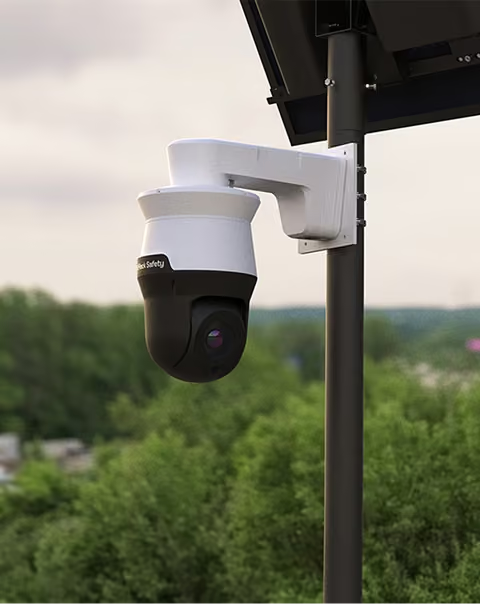
Fixed and PTZ cameras for parks, retail corridors and downtown areas with LPR cueing and encrypted evidence export.
Park, trail and transit perimeters that record before and after a plate pass, replacing unmonitored cameras that are only pulled after the fact.
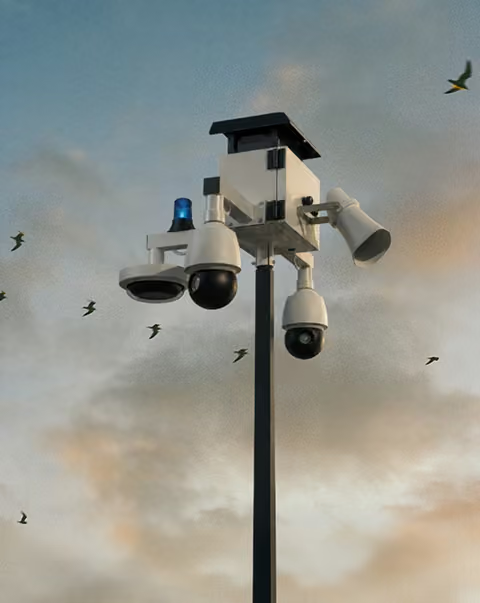
Acoustic gunshot detection paired with nearby LPR reads in FlockOS, with mandatory case codes and audit tools. Customer data is owned by the agency.
When shots are reported with no witnesses, acoustic, optical and drone records are searched together under one case number within minutes.